
String Swing Guitar Racks: Keeping Instruments Accessible, Protected, and Ready to Play
When I first started buying guitars, I used individual floor stands. Eventually, I upgraded to multi-guitar floor racks. They did the job, but every musician with a growing collection eventually faces the same problem: floor space disappears quickly.
Stands and floor racks can make sense for a few instruments, especially if you need to move them regularly. But once you have several guitars, basses, acoustics, or related instruments in the same room, they start to take up valuable space. They also make cleaning harder, clutter a studio visually, and can leave instruments vulnerable to a bumped stand, a curious pet, or a crowded room.
I remembered seeing wall-mounted guitar displays in music stores and began searching for a similar solution for our collection. I wanted the guitars accessible—ready to pick up when inspiration struck—but I also wanted the room to look intentional, not like a storage area. That search led me to String Swing.
String Swing manufactures wall-mounted instrument storage systems in the United States, including individual hangers, multi-guitar rails, and specialized mounting options for a wide range of instruments. Their current Strongwall systems feature aluminum slatwall panels, powder-coated steel hangers, and composite tubing at contact points. The company’s 3-guitar system holds acoustic, electric, and bass guitars on a 24-inch rail, with pivoting cradles that accommodate different headstock shapes.
From Floor Stands to Wall Storage
Our collection is somewhere between 26 and 30 guitars. You would think I would know the exact number, but I never seem to remember it. We do not collect instruments simply as trophies, although there is certainly visual pleasure in seeing a room full of guitars. Each instrument has a practical role: a particular tuning, pickup configuration, scale length, sonic character, recording purpose, or musical history.
When I ran a commercial recording studio in Brooklyn, many of our guitars lived in cases in a loft. Keeping them cased offered protection, but it also created a barrier. If an instrument is hard to reach, it is less likely to be used. A guitar that requires climbing, moving cases, and unpacking can easily become the guitar you intend to play someday, not the one you actually use.
After I closed the commercial studio—because I no longer wanted to take on every job necessary to keep a commercial operation running—and moved our work into an apartment-based studio for our own projects and selected productions, I wanted a different relationship with the instruments. I wanted them visible, accessible, and integrated into the working space.
The guitars needed to be ready when an idea arrived.
That may sound romantic, but it is also practical. Creative momentum can be fragile. If you hear a part, want to test an arrangement, or need a different instrument for a recording, having the guitar immediately available helps. A wall-mounted system removes friction from that process. You see the instrument, reach for it, and start playing.
Choosing String Swing
Many of the guitar-store wall racks I had seen were functional but looked industrial. There is nothing inherently wrong with that look, especially in a retail environment, but I wanted something that would work in a home studio and feel like part of the room.
After researching wall-mounted options, I found String Swing. The company offers several rack styles, including wood-based display systems and modular aluminum Strongwall systems. I initially chose two walnut wall racks for our studio to create a warmer, furniture-like look that complements the space rather than resembling a retail display.
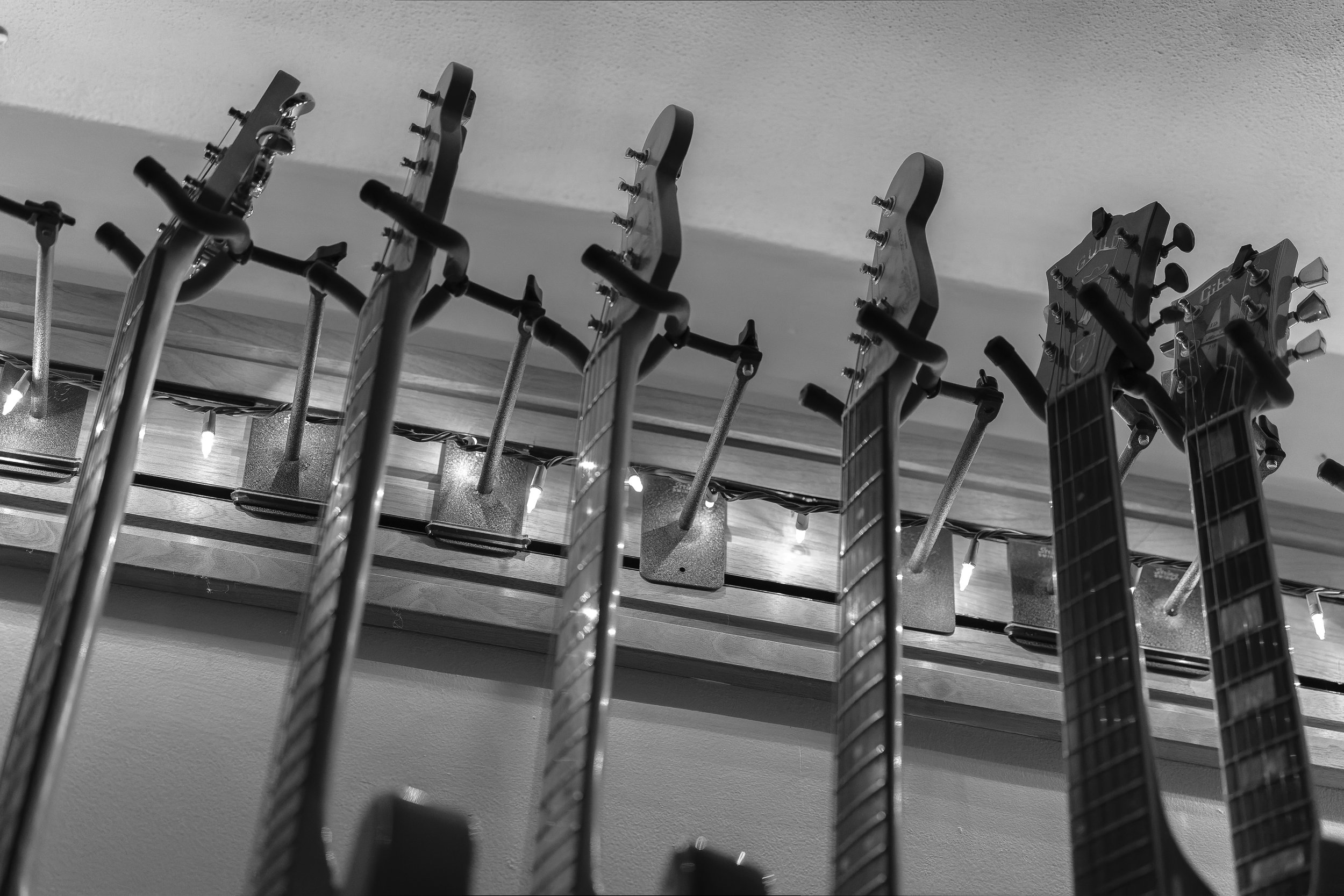
We installed two long racks on the same wall: one mounted high and the other lower. The layout allowed us to use vertical wall space efficiently while creating a clean, organized display. It also gave the guitars their own designated area, rather than spreading them throughout the room.
The difference was immediate. The floor was easier to clean, the room felt larger, and the collection looked more organized. More importantly, the instruments were easier to use.
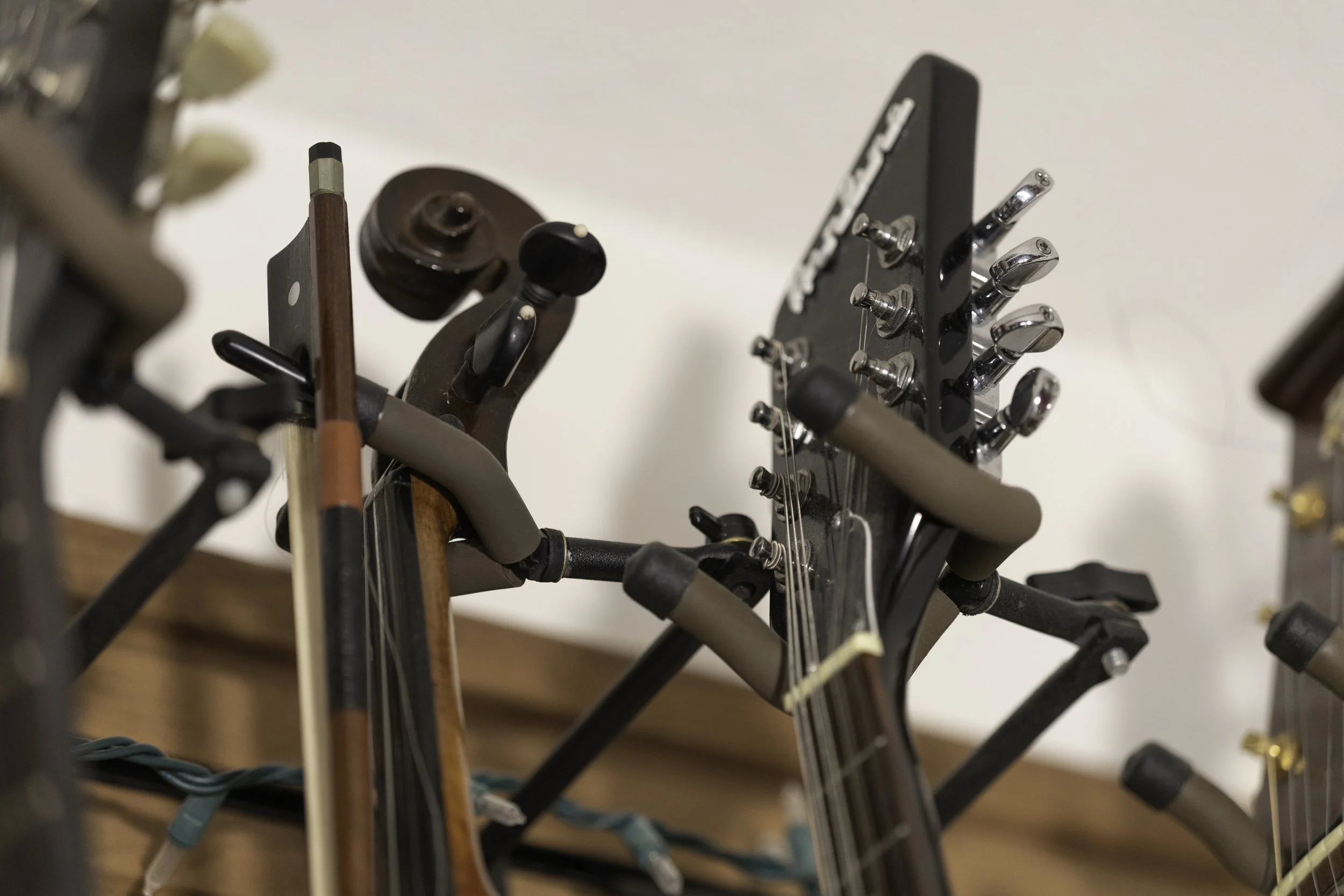
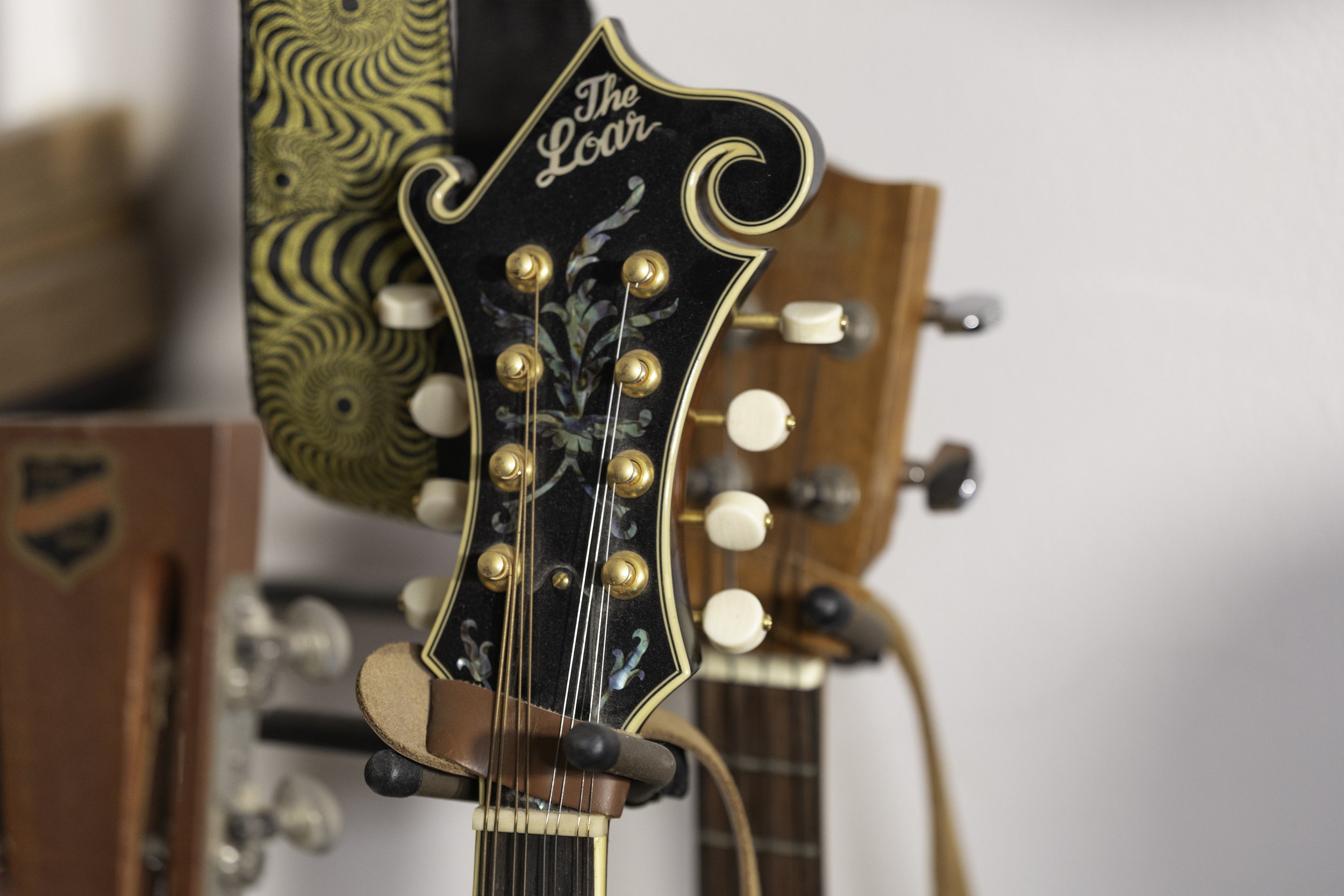
Over time, the collection expanded beyond standard electric and acoustic guitars. We added instruments such as mandolin, banjo, violin, and lap steel. One advantage of a modular system is that you can adapt the storage to the instruments you own. String Swing offers different yokes and cradle configurations for various neck widths and instrument types, rather than forcing every instrument into the same generic hanger.
Why Accessibility Matters
Many people believe instruments should always remain in their cases unless they are being played. Cases are important. They are essential for travel, long-term storage in challenging environments, and for instruments that need extra protection. But in a stable, properly maintained studio environment, keeping instruments out can make them more useful.
A guitar that is visible invites use. You might pick up a baritone guitar because it is in front of you. You may try a mandolin part because it is no longer buried behind three cases. You might reach for an acoustic guitar while working out a harmonic progression, or grab a solid-body electric when a recording needs a different attack.
Accessibility supports experimentation.
For a songwriter, composer, producer, teacher, or working musician, the room itself can shape how often you create. A space that requires constant unpacking and rearranging creates small obstacles. A space where instruments are visible and ready encourages you to try ideas before talking yourself out of them.
Wall racks also make a collection easier to assess. You can see where you overlap, which instruments you use most, and what is missing. If you have five versions of essentially the same guitar but no instrument that meets a particular recording need, seeing the collection together can make that obvious.
The 3-Guitar Strongwall Rack
More recently, I got my hands on a String Swing 3-guitar rack for my office at SUNY Purchase, where I am a music professor. This version differs from the walnut racks I previously installed, but it clearly builds on the same central idea: secure, visible, adjustable instrument storage.
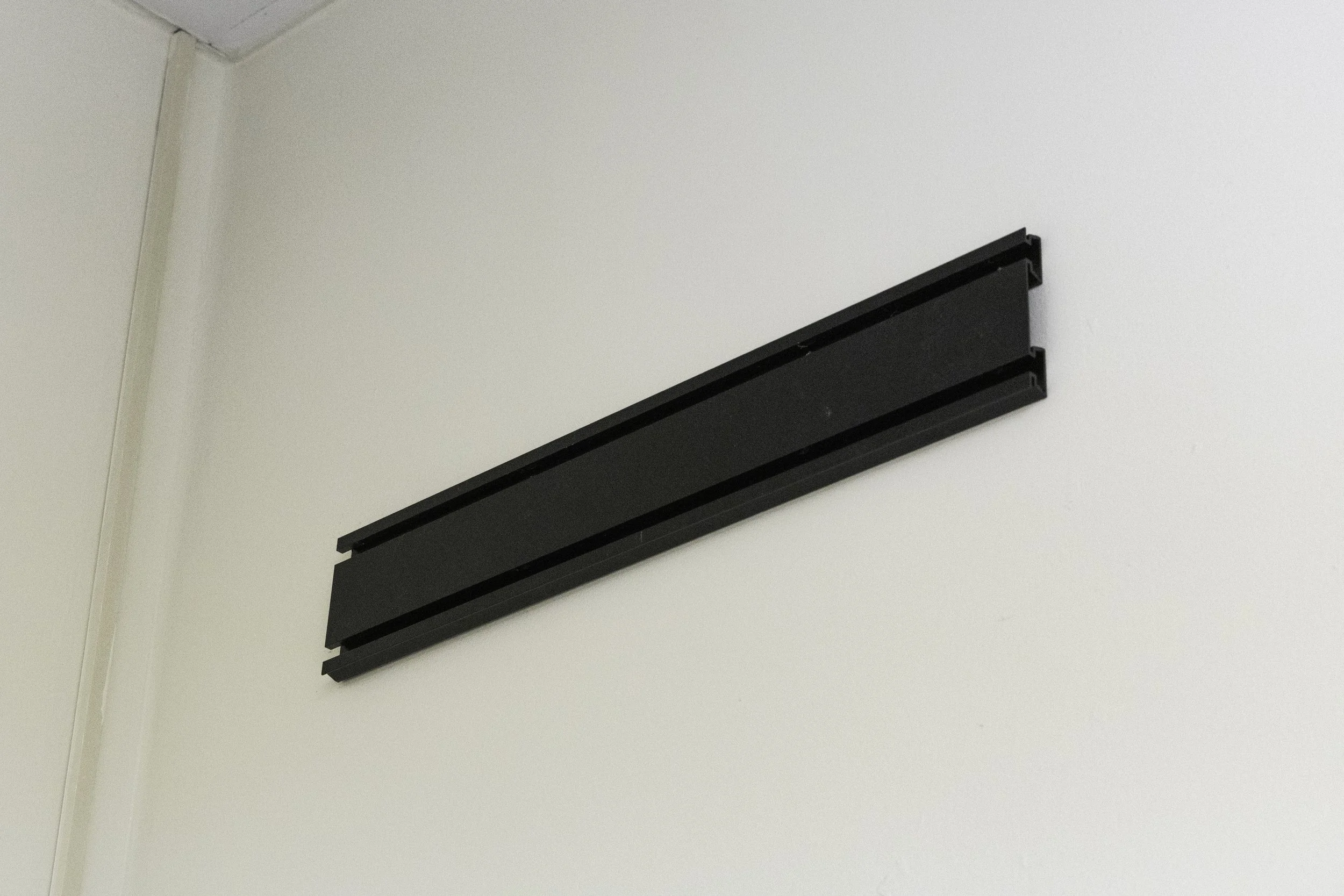
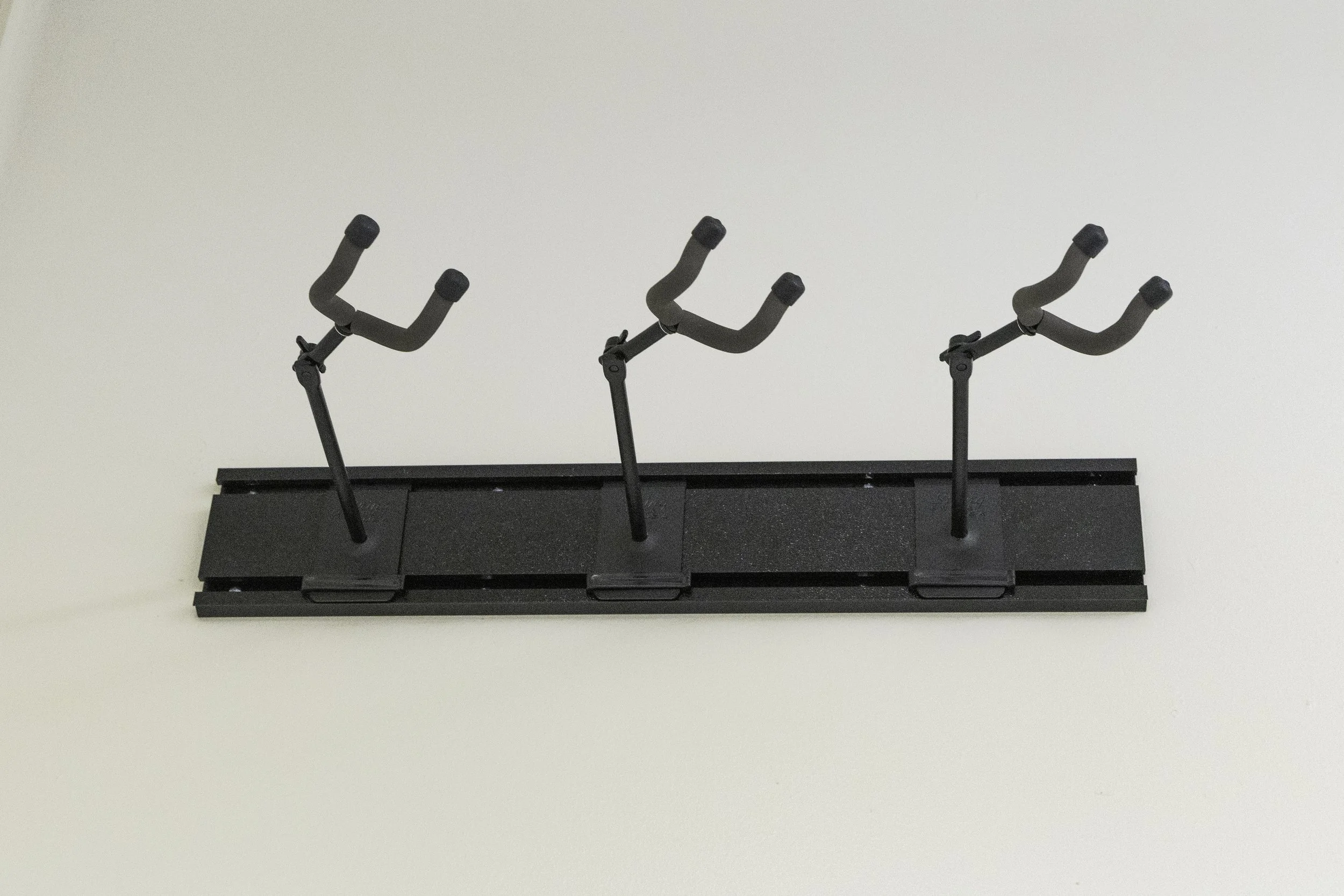
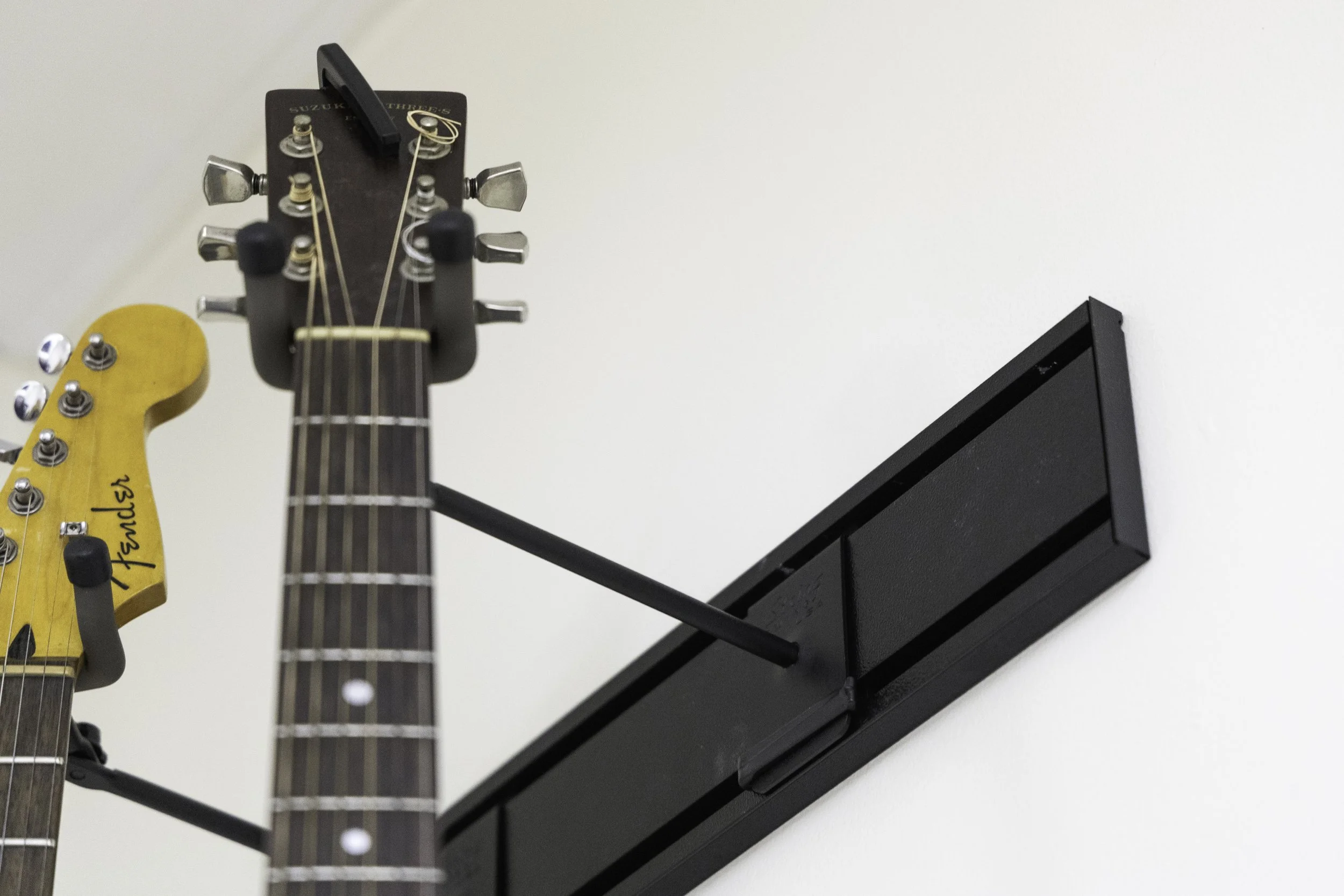
The model is the SW3RL-K, a modular wall-mounted system designed to hold up to three guitars. It uses a single 24-inch aluminum Strongwall panel with three pivoting CCO3RL-3-K hangers. The panel measures 24 inches wide, 4.5 inches high, and projects about 12.5 inches from the wall.
I like this format because it is compact without feeling undersized. It is ideal for an office, teaching studio, practice room, apartment workspace, or a smaller section of a home studio. Rather than requiring a long custom-length rail, the system arrives in a manageable 24-inch module. If you need more capacity later, you can add more panels alongside it.
Modularity is useful. A three-guitar rack can be a complete solution for one room or the start of a larger installation. String Swing also offers related five- and ten-guitar versions that use joined 24-inch rail sections. The five-guitar system spans four feet and includes five hangers, while the ten-guitar version spans eight feet and includes ten hangers.
The 3-guitar unit is available in several slatwall finishes, including black, cherry, copper, glimmer gray, gray oak, light silver, silver, black walnut, and white. I chose black for the office. I live in New York City, and if you have spent time here, you understand the appeal of black: If NYC had a color, it would be black.
Construction and Design
The current Strongwall system has a clean, matte-metal finish. It looks sleek and professional rather than overly decorative. In a teaching office, that matters. I did not want the wall to look like a guitar-store display, nor did I want something precious or fussy. The black aluminum rail creates a simple visual frame while keeping the instruments themselves the focus.
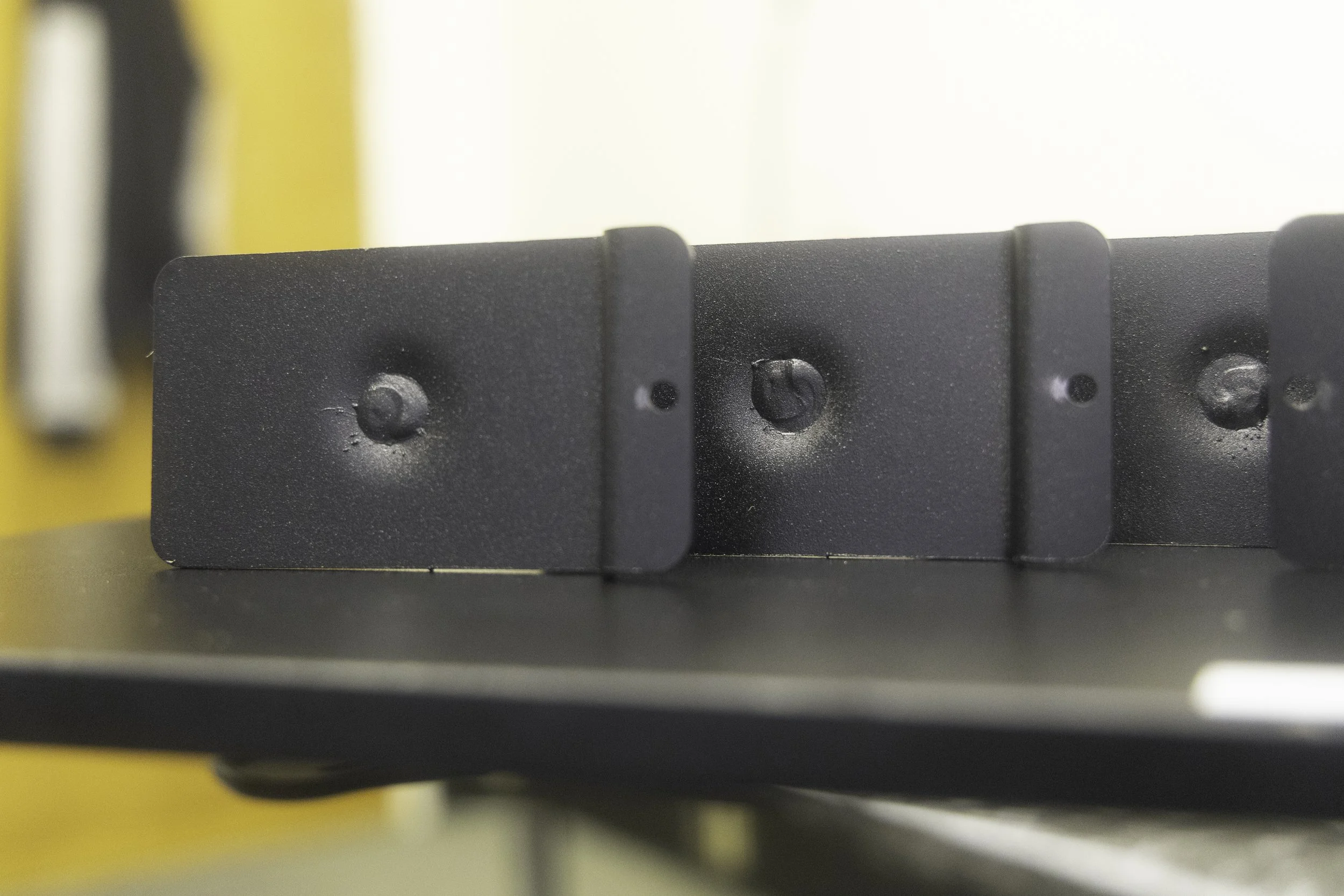
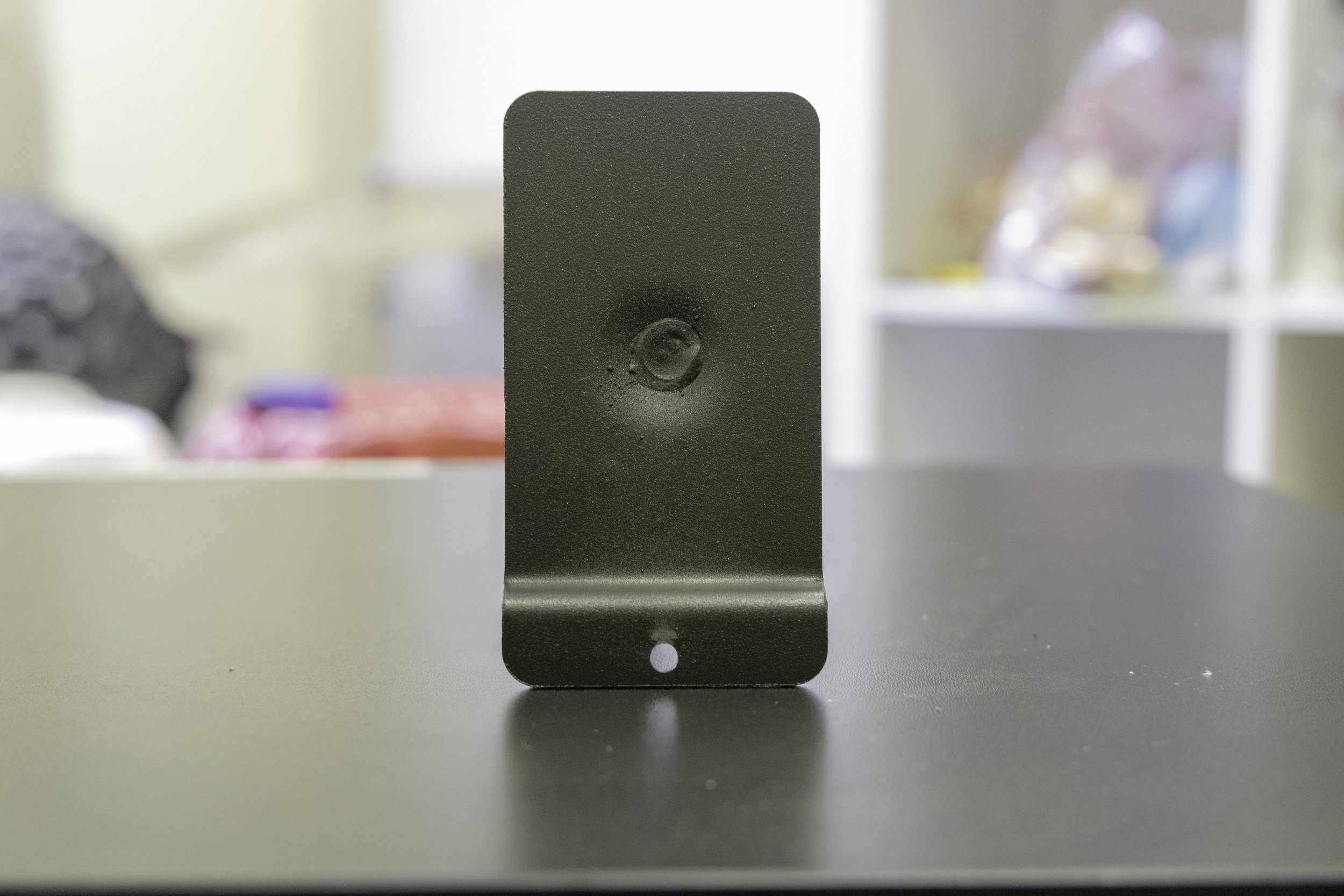
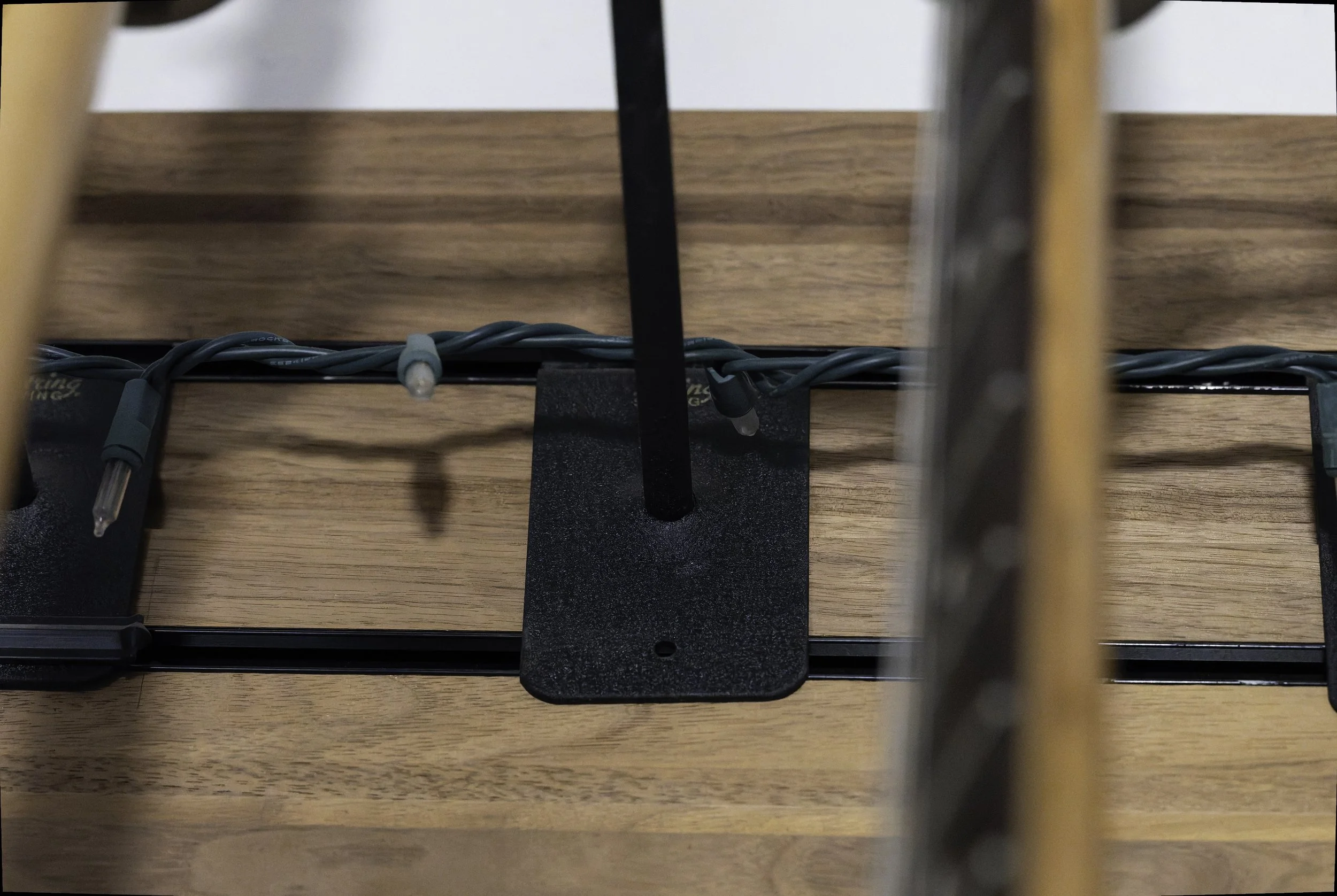
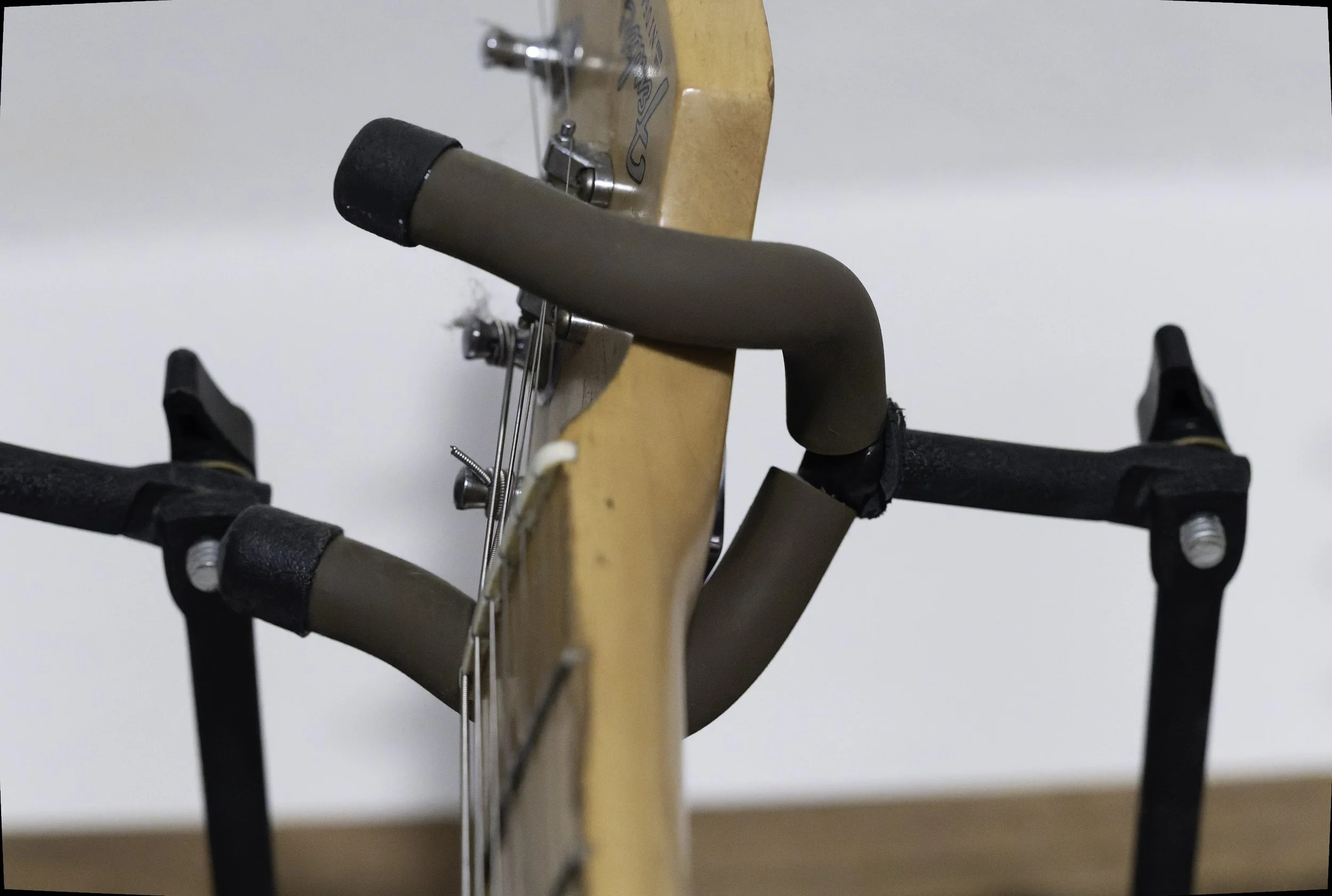
String Swing lists aluminum for the rail, powder-coated steel for the hangers, and composite tubing at the contact points. The hanger cradles pivot to accommodate different headstock shapes, including asymmetrical designs, and the system allows you to adjust the hanger position along the rail for spacing.
That last feature is more useful than it may seem. Guitar bodies are not all the same width. An acoustic jumbo, an offset electric, a bass, and a narrow solid-body guitar will take up space differently. A fixed-position rack can leave awkward gaps or force instruments to sit too close together. Adjustable hangers make it easier to tailor the rack to the specific instruments you own.
According to String Swing, each individual hanger is rated for up to 15 pounds, while the rail has a stated capacity of up to 50 pounds per stud at the anchoring point. Those ratings make the system suitable for ordinary guitars and basses when it is mounted correctly to appropriate structural support.
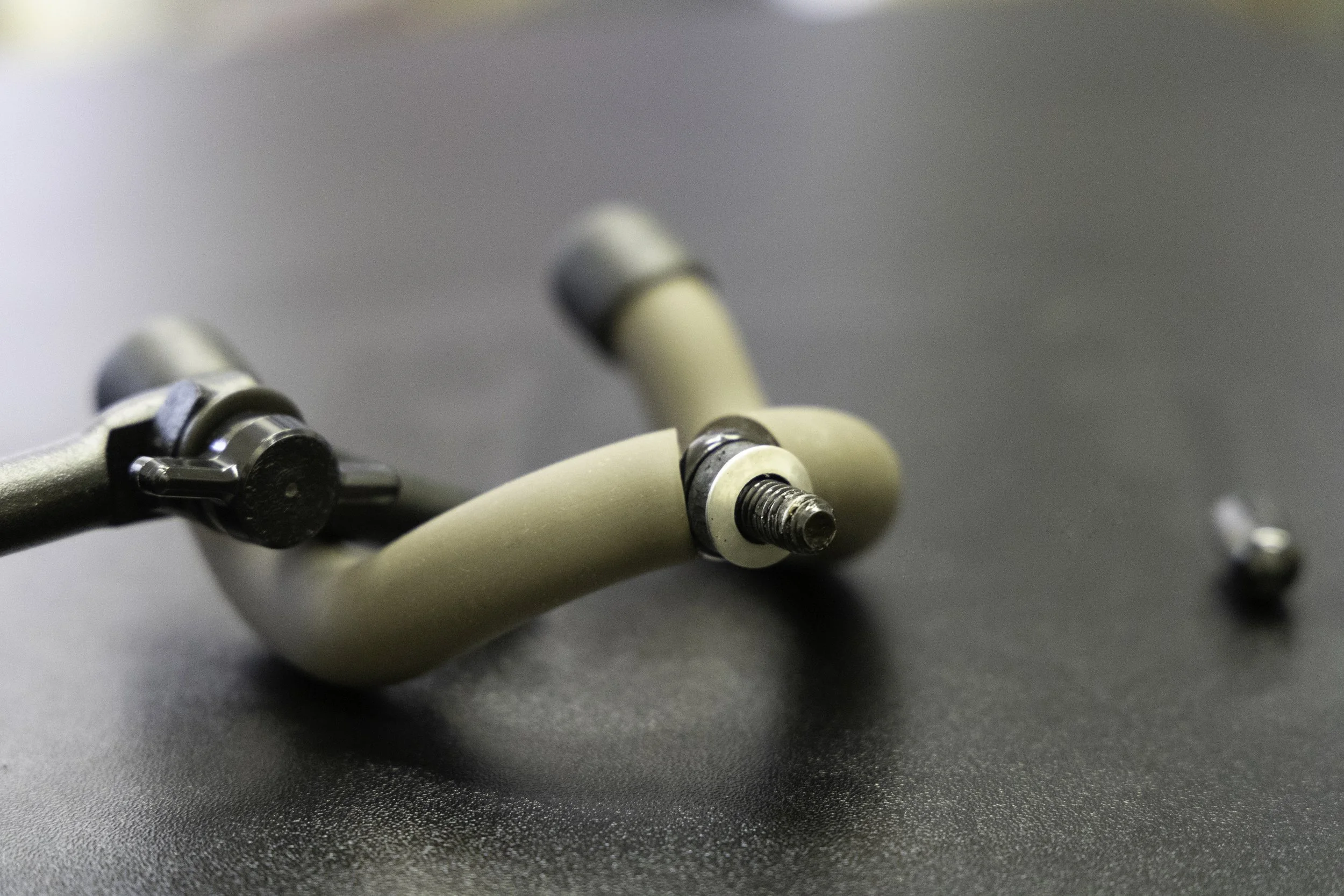
The company also describes the cradle design as a deep-groove “keeper” yoke, intended to guide the instrument into place and reduce the risk of a guitar slipping out if it is set down carelessly. The contact points are covered with composite padding, which the company says is designed to avoid the finish-reactivity problems associated with some foams and rubbers.
Still, if you own a vintage instrument or a guitar with a delicate nitrocellulose finish, use common sense.

Installation Is Not the Place to Guess
The racks themselves are straightforward. Installation, however, deserves respect.
I strongly recommend hiring a skilled installer or carpenter unless you are confident in locating studs, assessing wall construction, and using the proper mounting hardware. A wall-mounted guitar system exists to safely hold valuable instruments. A poorly installed rack defeats that purpose.
When I first had racks installed at home, a friend helped me. Unfortunately, the original wall proved more complicated than expected. The rack began to pull away from the wall, which was nerve-racking, especially with multiple guitars hanging from it.
The problem was not the rack concept. It was the wall and the installation approach. You do not always know what lies behind drywall: unusual framing, metal studs, old construction, inconsistent blocking, electrical runs, or previous renovation work. We ultimately moved the racks to a better wall and installed them properly.
That experience changed my advice: do not treat installation as an afterthought.
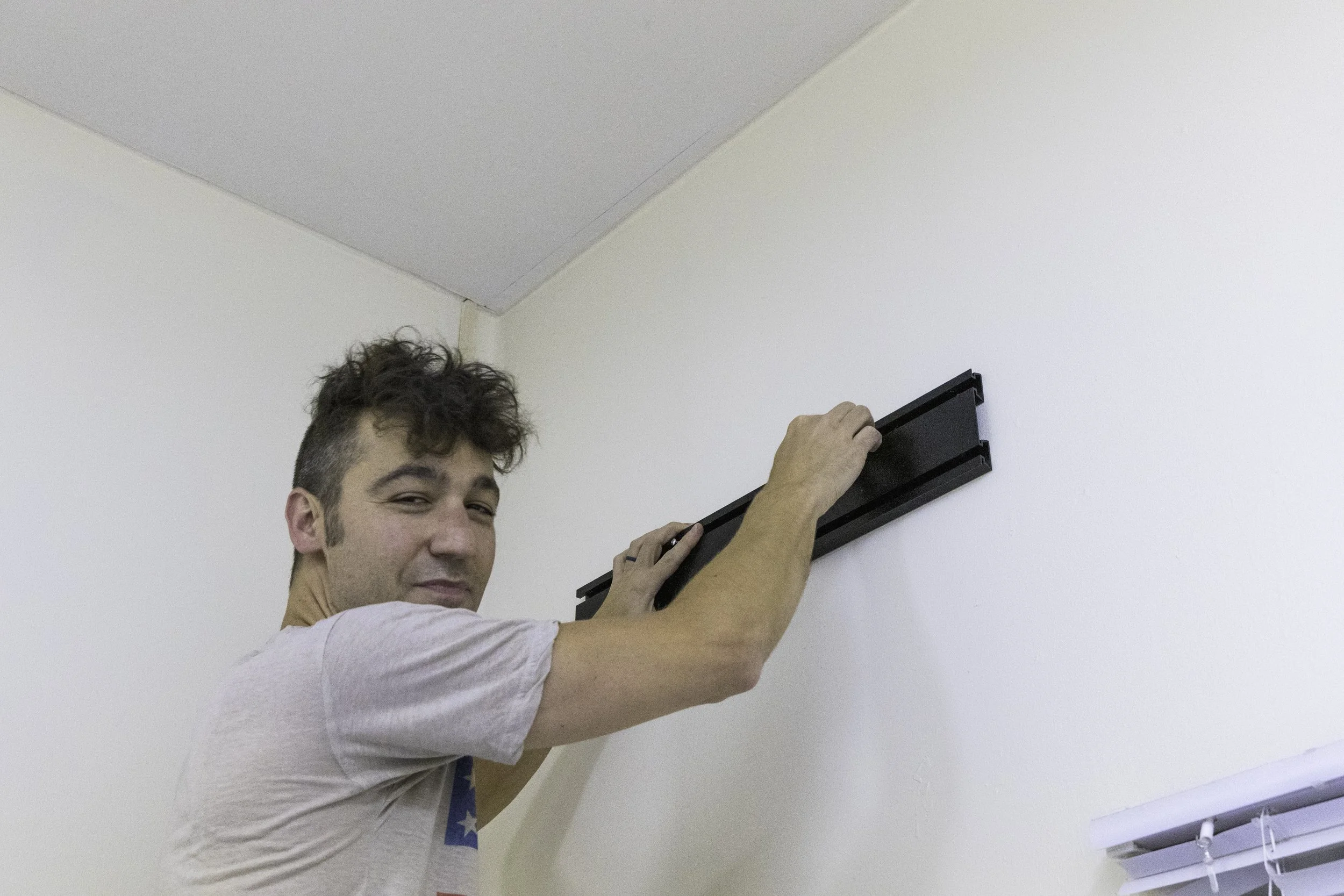
For the office installation, my friend Chris Anderson—owner of Working Class Guitars—handled the work. Chris has construction experience and has used String Swing systems before, so I was confident he would assess the wall and install the rack properly. He noted that the current kits seemed improved and was particularly enthusiastic about the 24-inch modular format.
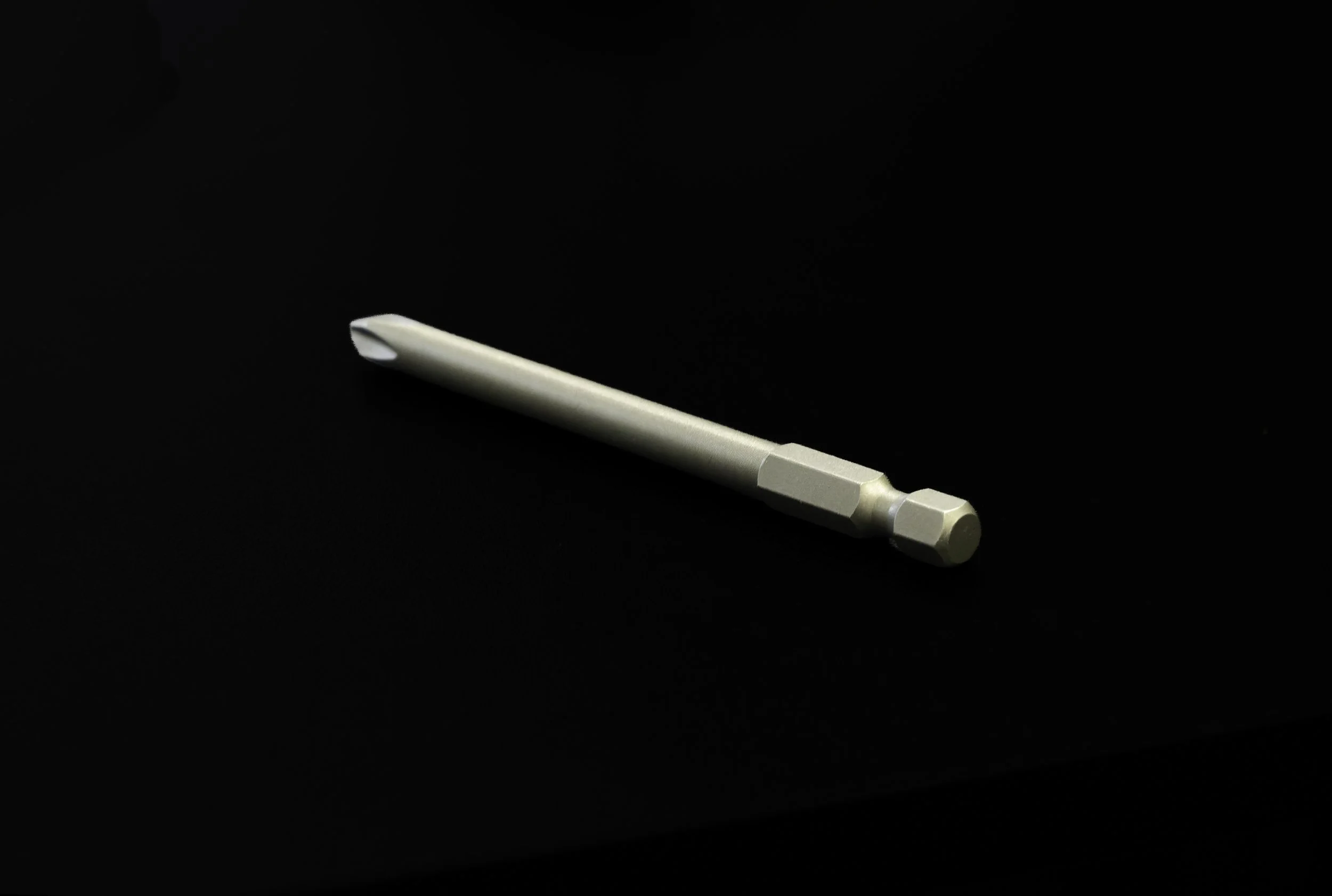
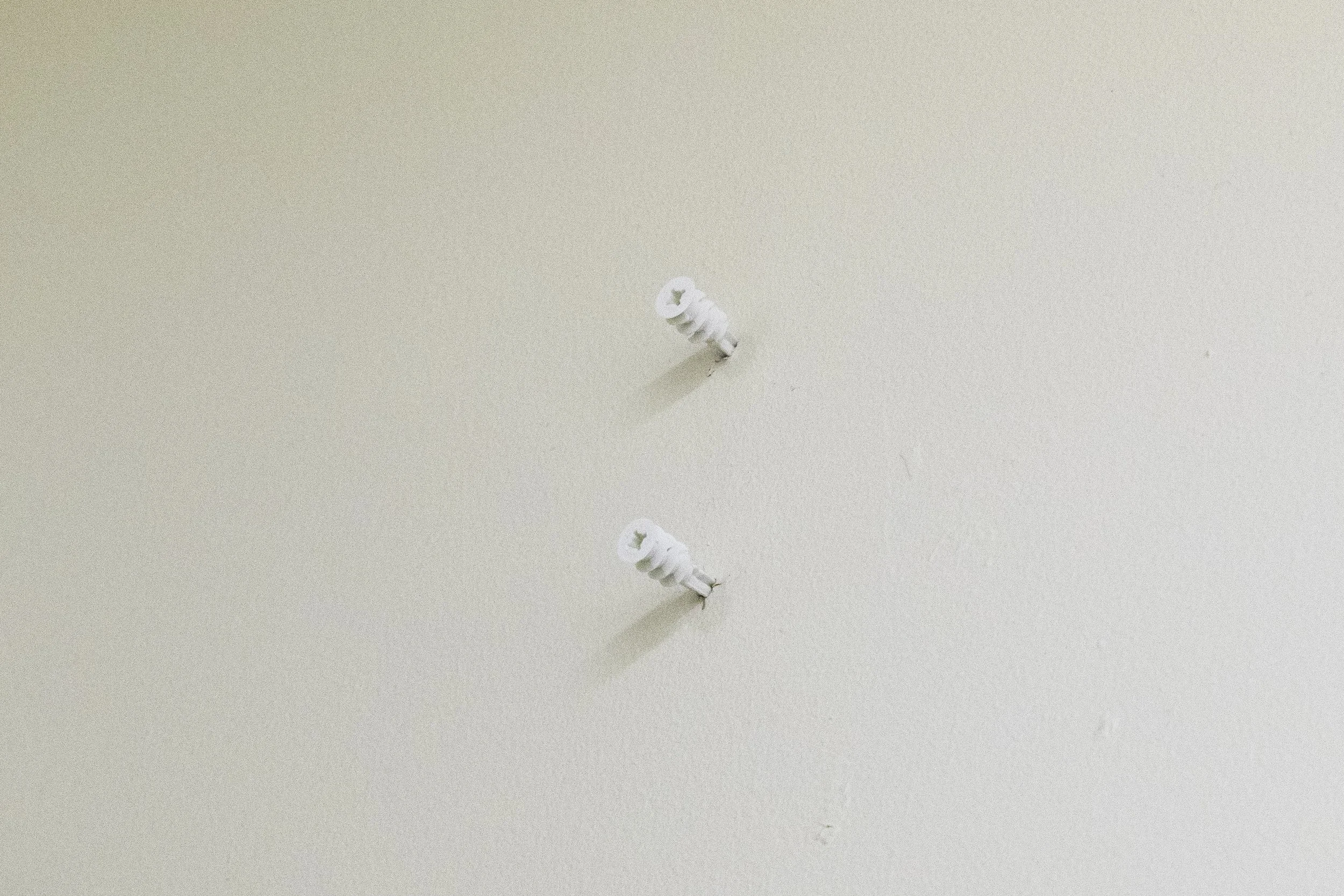
String Swing includes mounting hardware and, in the kit I received, a Phillips-head drill bit. That is a small but thoughtful inclusion. It is rare for a company to provide a bit that helps the customer use the supplied hardware, and it reflects attention to the actual installation process.


Humidity and Rack Placement
A wall-mounted rack makes instruments more accessible, but it does not eliminate the need for proper environmental care. This is especially important for acoustic guitars.
If you live in a climate with cold winters and indoor heating, I recommend placing acoustic guitars on a lower rack rather than a high one whenever possible. Warm air rises, so the upper portion of a room can be noticeably warmer and drier than the lower portion. The difference may be only a few feet, but wood instruments are sensitive to long-term changes in humidity.
At home, our lower rack is primarily for acoustic guitars, while the upper rack is for electric guitars. That is not a hard rule, but it is a sensible arrangement in a heated apartment or studio. Acoustic guitars—with their thinner solid-wood tops, bracing, and more humidity-sensitive construction—are generally more vulnerable to dry conditions than solid-body electrics.
We also run a large cool-mist humidifier throughout the fall and winter. It is a bit tedious. Humidifiers need refilling, cleaning, and regular attention. But if the goal is to keep acoustic instruments accessible rather than sealed in cases for half the year, environmental care is part of the responsibility.
I prefer cool-mist humidifiers because they avoid the hot-water reservoir used by warm-mist units. Regardless of which type you choose, maintenance is key. Dirty humidifiers can circulate mineral residue or microbial growth, so clean the unit according to the manufacturer's instructions and use the recommended water.
A small hygrometer in the room is also worthwhile. It provides an actual reading instead of guesswork. You do not need to obsess over every fluctuation, but knowing whether your room is extremely dry can help you act before an acoustic guitar develops sharp fret ends, a sunken top, cracks, or other humidity-related problems.
A System That Can Grow
One reason I keep returning to String Swing is that the system can scale with the collection. The first decision does not need to be permanent. You can start with a compact three-guitar rack, add another 24-inch section later, or move toward a larger five- or ten-guitar arrangement as your needs change.
That flexibility matters to musicians because collections rarely remain static. A player may add a baritone, a bass VI, a resonator, a 12-string, a new acoustic, or an instrument needed for a specific recording project. A teacher may want a few guitars available in an office or classroom. A studio may need guitars organized by tuning, session use, or client access.
The rack becomes infrastructure rather than a one-time furniture purchase.
I will be installing a second 24-inch String Swing kit in our studio because we have officially run out of rack space—and, realistically, we are not finished acquiring instruments. That is the nature of a working collection: the instruments expand as the music does.


Final Thoughts
A wall-mounted guitar rack is more than a storage solution. It changes how a studio functions. It makes instruments visible, accessible, and easier to integrate into daily creative work. It reclaims floor space, simplifies cleaning, and can turn a guitar collection into a thoughtful part of the room’s design.
String Swing’s Strongwall 3-guitar rack is especially compelling for a compact studio, office, rehearsal room, or teaching space. Its 24-inch modular aluminum rail, adjustable pivoting hangers, 15-pound-per-hanger capacity, and compatibility with different guitar types make it a practical starting point for musicians who want their instruments within reach.
The important part is installation. Mount it correctly, respect the wall's structure, use appropriate environmental controls for acoustic instruments, and choose a layout that makes sense for how you play and work.
When instruments are easy to reach, they get played more. And that is the point.