
Direct Sound Extreme Isolation Headphones: Listen Up
Direct Sound
Headphones are an underappreciated tool in the recording studio. I’ve noticed a lot of folks drop serious cash on mic preamps, compressors, converters, and boutique mics, yet they cut corners on headphones. This is a major oversight, because what good are all the tools to capture great sound if you can’t actually get great performances?
We obsess over noise floors and signal chains, but the musician’s experience in the room is what really decides whether the take lives or dies. If the cue mix is sketchy, or the click is blasting, or the bleed is wrecking your overheads, nobody cares that you used the fanciest preamp on the snare. The performance is the product. Monitoring is how you get there.
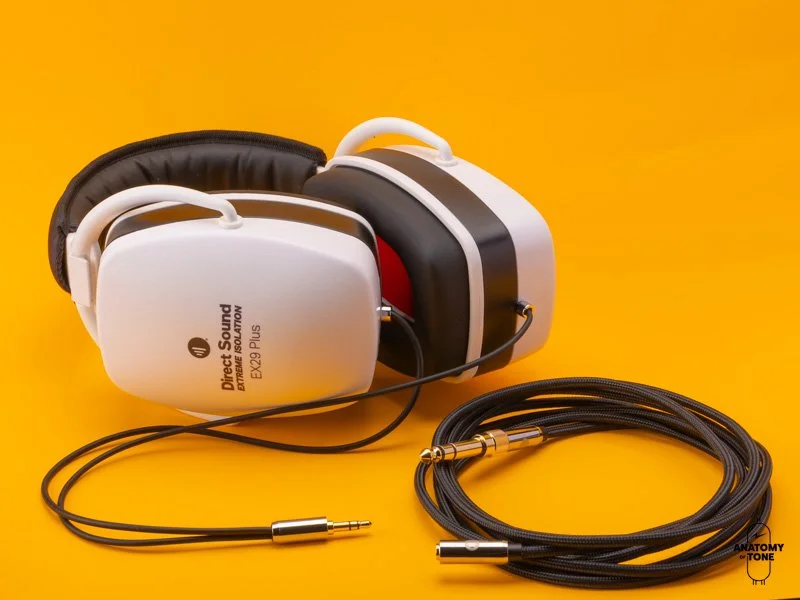
Direct Sound’s Extreme Isolation headphones are one of those pieces of gear that quietly solve a bunch of these problems at once. They’re not glamorous, they don’t make you look like you’re mixing at Abbey Road, but they help you play better, protect your ears, and keep your mics clean.
Let’s talk about why that matters.
The Headphone Problems We Ignore
There are two main issues we deal with constantly when it comes to headphones in the studio.
The first is headphone bleed: sound from the cans leaking out and getting picked up by microphones. This is especially brutal when musicians are using a click track and have to crank it way up just to hear it clearly. That sharp “tick tick tick” doesn’t just disappear—it jumps right into your snare mic, your overheads, your vocal mic, your acoustic guitar mic, and suddenly your “tight” track has a click buried in every transient. Good luck editing around that.
The second problem also revolves around the click track: when you’re playing loud instruments—drums, cranked guitar amps, brass, even just a live band in a small room—it can be very difficult to keep the click audible without turning the headphones into a weapon against your own ears.
I was recently recording drums for a new track of mine, and there was one section where I kept losing the click. Every time I’d dig in a little harder on the groove, the click would just vanish under the drums. My solution, of course, was the same as everyone’s first instinct: turn the volume up. But after a certain point, I knew I was reaching a level that was dangerous for my ears and would definitely leak into the overhead mics.
That’s the exact no‑win scenario a lot of us end up in:
Turn it up, and you’re slowly frying your hearing and contaminating your tracks.
Keep it where it is, and you’re flying half‑blind, hoping your internal clock is enough.
Neither of those should be the default.
Why Regular Headphones Don’t Cut It
Closed‑ear headphones help, but they’re not enough on their own. I’m still surprised how often I show up at a studio to track drums or loud guitar amps and I’m handed a pair of open‑ear headphones. You know the ones—super comfy, sound great, leak like crazy.
I always wonder: how do they think this is going to go?
You’ve got a drummer sitting next to a live kit, or a guitarist standing in front of 100 watts of tube amp joy, and you hand them open‑backs. The engineer might love them for mixing, but in a loud room, open‑backs are basically speakers strapped to your head. They let everything in and everything out. It’s like trying to hear the click through a window during a thunderstorm.
Even with traditional closed‑backs, the isolation is usually just “good enough for casual listening,” not “good enough to protect hearing and keep bleed under control in a loud tracking environment.” Most of the big popular headphones are designed for critical listening: referencing a mix, listening to music, maybe doing some light editing. They’re great at that. But they’re a very specific tool.
“Headphones are an underappreciated tool in the recording studio. This is a major oversight because what good are the tools to capture great sound if you can’t get great performances?”
Tracking loud instruments is a different job:
You need serious isolation from the room.
You need minimal bleed into mics.
You need to hear clearly without detonating your eardrums.
We’d never walk into a session with one mic and say, “Yep, this will handle everything.” Most studios have a mic locker with options: dynamics, condensers, ribbons, different flavors for different jobs. Why not think of headphones the same way?
Have a pair for mixing, a pair for casual listening, and a pair designed for isolation and protection when you’re tracking drums, guitar amps, or doing live band sessions.
Enter Direct Sound Extreme Isolation
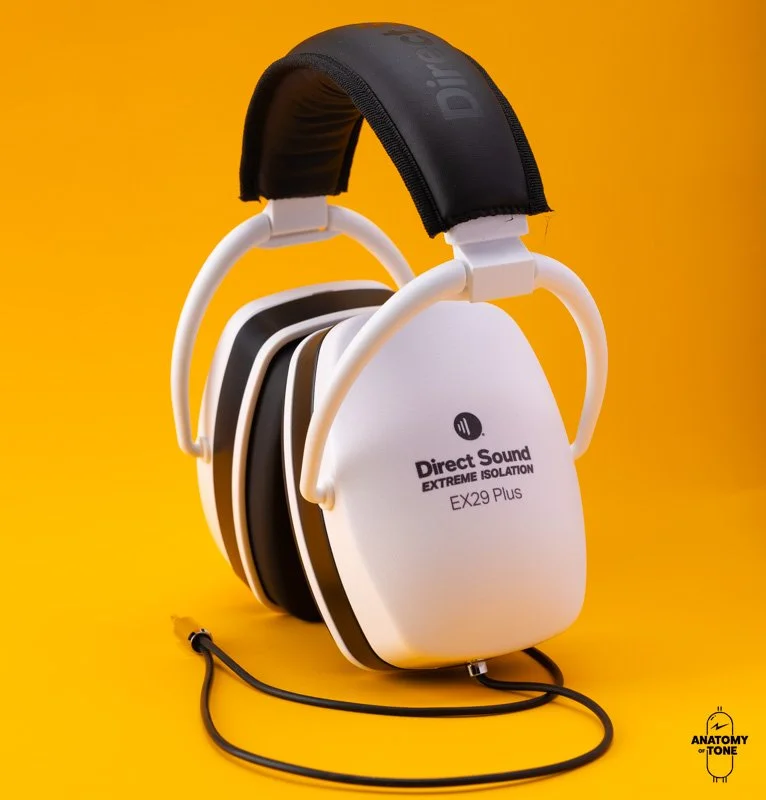
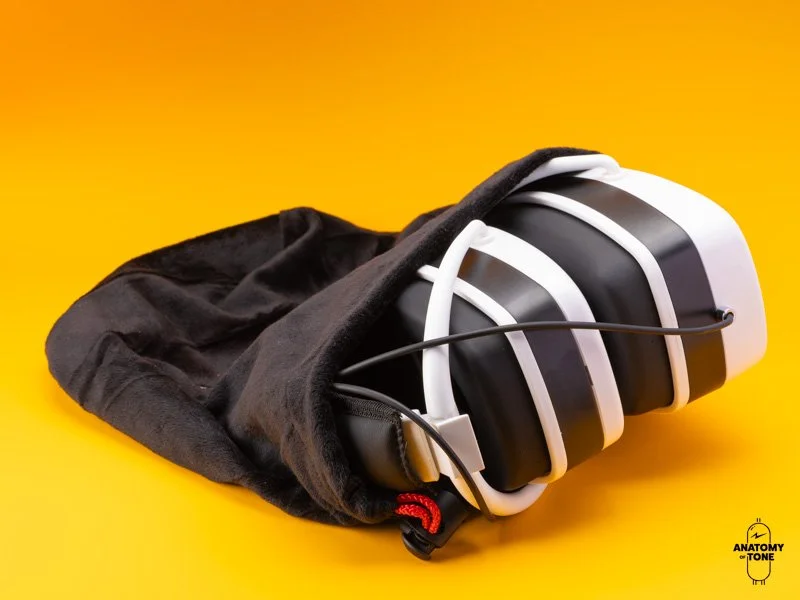
This is where Direct Sound comes in. They make headphones specifically for scenarios where you need to isolate sound and protect ears. Their Extreme Isolation line is built like a cross between studio headphones and industrial ear protection.
Some key things they do:
They offer up to 36.7 dB of passive environmental noise reduction, depending on the model, which is in the same ballpark as proper over‑ear hearing protection.
They’re closed‑back and seal tightly, so they act like earplugs and headphones at the same time.
Because they keep so much outside noise out, you don’t have to run your headphone mix nearly as loud to hear it clearly.
That last point is huge. By preventing noise from getting in, you don’t have to turn the click or cue mix into a weapon just to compete with the room. You can keep the click at a sane level and still hear everything fine.
On the flip side, because they seal so well, they also keep your headphones from bleeding into mics. That’s especially useful when recording:
Acoustic guitar
Acoustic piano
Quiet vocals
Stringed instruments where click bleed can ruin a take
The performer gets a headphone mix they’re comfortable with at a safe volume, and you get cleaner tracks. Everyone wins.
Saving the Take While You’re in the Zone
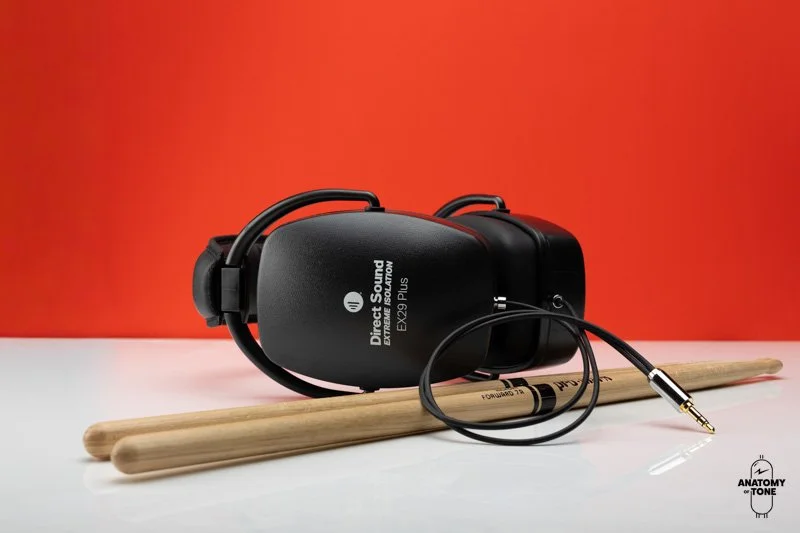
Back to that drum session I mentioned.
Because I was losing the click in the loud section, it took me several more takes than it should have. Every time I got to that part of the song, I’d start second‑guessing whether I was still locked, which is not the headspace you want when you’re trying to groove. The performance turns into a math problem instead of a feeling.
Being able to hear your cue clearly means you can stay in that creative zone longer. You don’t have to constantly negotiate between “Am I in time?” and “Am I going to need hearing aids by 50?” You just play.
Nobody wants to lose a take they were really feeling because of a technical issue that wasn’t their fault. The click disappearing shouldn’t be the reason a magic performance never makes it to the record.
Fail Safe: Self‑Engineering with Isolation
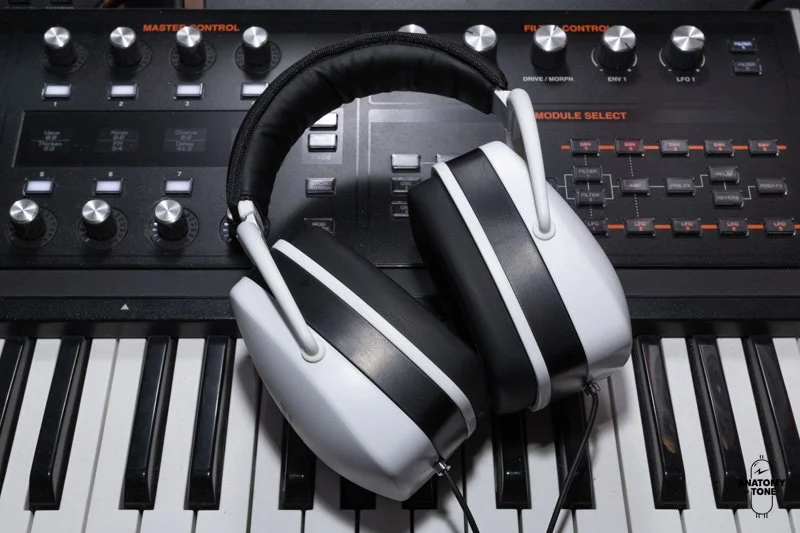
I also use Extreme Isolation headphones when I have to self‑engineer an instrument I’m playing, like acoustic guitar. When you’re both the player and the engineer, you’re juggling:
Playing the instrument
Making sound in the room
Moving the mic around
Trying to evaluate subtle tone changes in real time
With open‑ear—and even many closed‑ear—headphones, too much of the live room sound leaks in and clouds your judgment. You move the mic a half‑inch, the sound in the headphones changes a little, but the real acoustic sound in the room is still smacking you in the face. It becomes hard to tell if the improvement you think you’re hearing is real or just the room lying to you.
With the Extreme Isolation headphones, you can more clearly hear the changes that happen with small mic movements. That’s true for:
Acoustic guitar
Guitar amp mic placement
Percussion
Even vocals when you’re experimenting with distance and angle
You basically get a more “control‑room‑like” perspective while still being out in the live room playing. It’s not magic, but it’s closer to an honest reference than most tracking headphones give you.
Flow State Details That Actually Matter
Direct Sound clearly put thought into the little touches on these headphones, and those small things add up when you’re in a flow state.
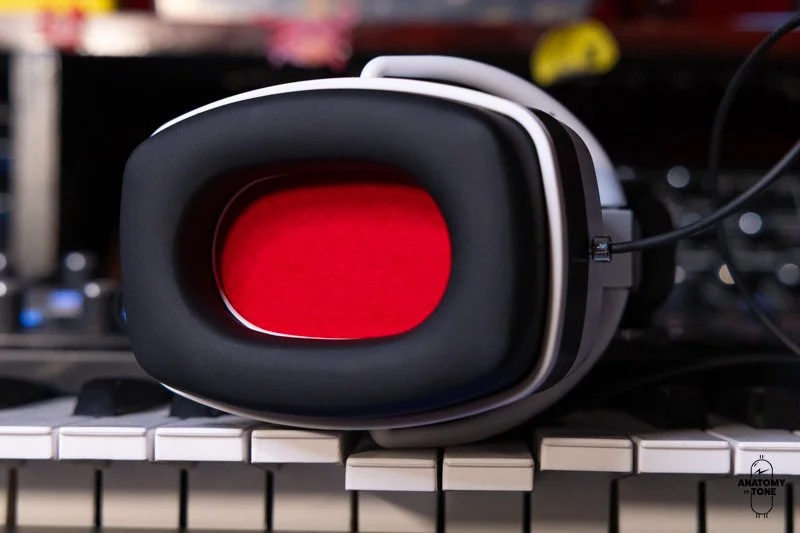
On the inside of the headphones, the right ear has red lining. It sounds trivial, but when you’re hot on an idea, the last thing you want is to waste ten seconds figuring out which side is which. You just grab the headphones and go. If you put them on backward, now your stereo image is flipped, and if you’re mid‑idea, flipping them around can be just enough of a distraction to break your concentration.
They also added a Braille “R” on the right ear. That’s a thoughtful touch for players and engineers with visual impairments. I have an eyesight impairment myself, so I appreciate it when companies consider the many types of people using their products. If only DAW designers would show that level of care, we’d all be better off. Why is the writing so small in DAW’s?
The Cable Situation (A Rare Win)
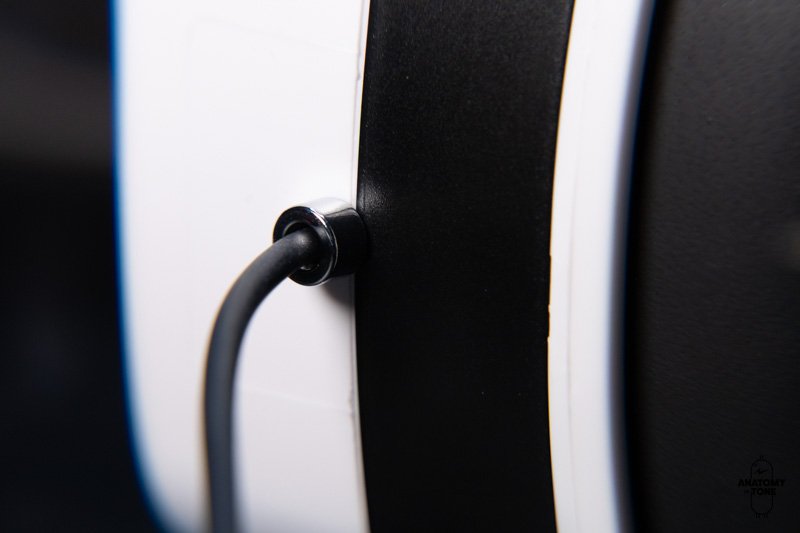
Anyone who uses headphones regularly has probably developed a deep, personal hatred for headphone cables. I’ve lost track of how many pairs I’ve had “repaired” only to have them come back worse. Sometimes the repair tech swears they know what they’re doing, but the cable never feels quite right again—intermittent connection, weird noise, twisted strain relief, you name it.
Direct Sound’s approach is refreshingly practical. Their system works like this:
A Y cable comes out of the headphones and terminates in a short section with a 1/8‑inch jack.
That short run connects to a longer extension cable.
If you step on the cable, it’s much more likely that the extension will just disconnect at the jack instead of ripping something inside the headphones.
You are going to step on your cables. Not “if.” When. And with heavy use, you will eventually have to replace an extension cable. But with the Extreme Isolation headphones, you’re not constantly replacing or repairing the actual headphones. You just swap out the extension and keep going.
You can also use whatever extension you want if you prefer a longer run. The extension they ship with is already longer than what most manufacturers include, which I appreciated, but it’s nice to know you have options.
I did, in fact, step on the cable—purely for testing purposes, of course—and the connection popped apart exactly the way it should. The headphones stayed safe. That’s the kind of “fail gracefully” design I like.
Comfort, Longevity, and Repairability
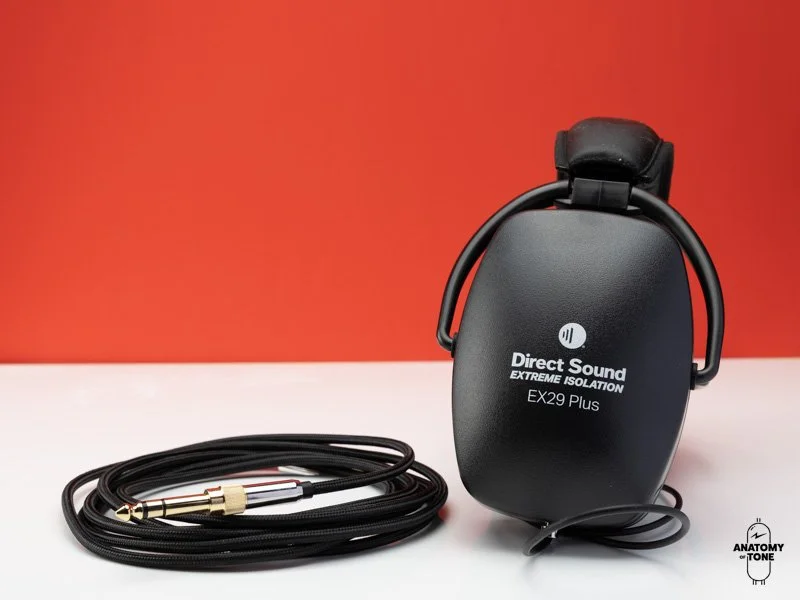
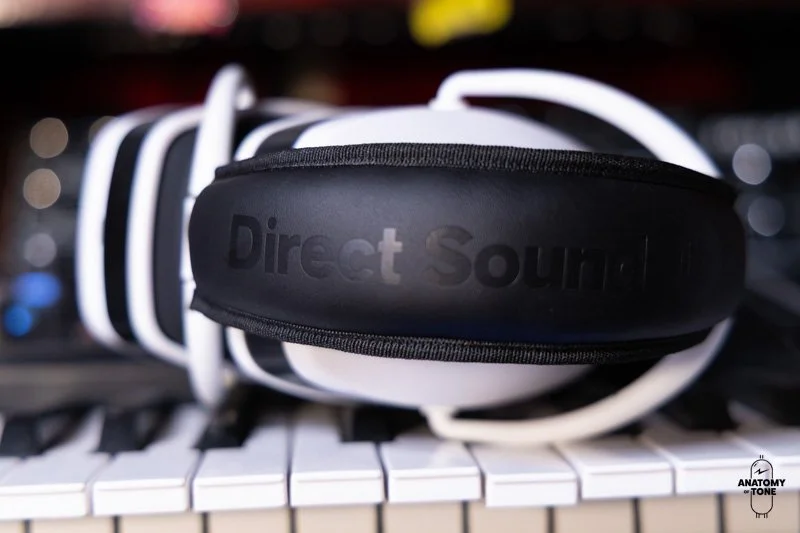
Fit‑wise, they clamp snugly on your head but are still comfortable enough to wear through long sessions. They feel more like industrial ear protection than hi‑fi headphones, but that’s kind of the point—they’re meant to keep sound out and stay put when you’re moving around.
Direct Sound also leans heavily on the idea that their headphones are repairable. They advertise that the Extreme Isolation models can be repaired in minutes without tools or soldering. That’s a big deal if you’re in a working studio or gigging regularly. Most consumer headphones are basically disposable. Something breaks, a driver goes, a hinge cracks, and you’re done. Into the trash they go.
How many headphones have you thrown out? I honestly lost count a long time ago.
Investing in headphones from a company that assumes heavy use, and designs for eventual repair rather than early death, is a nice change of pace. Gear that’s meant to be with you for the long haul always feels different. It’s built more like an instrument and less like a gadget.
Live Sound: Hearing What You Need
If you do live sound, you already know you’re living in a high‑volume environment most of the time. The stage wash, the PA, crowd noise—it’s all fighting for your attention. When something goes wrong, it’s essential to be able to quickly solo a channel, isolate what’s happening, and make a decision.
Using Extreme Isolation headphones in that scenario gives you a cleaner window into what’s actually coming down the line. You can:
Solo a vocal mic and hear feedback starting before the room melts down.
Check a drum mic that’s misbehaving without the rest of the kit drowning it out.
Troubleshoot noisy cables or weird buzzes while the band keeps playing.
Because you’re less distracted by the surrounding noise, your ears don’t fatigue as quickly, and you can work at more reasonable volumes. It makes your job easier and less stressful, which is something live sound desperately needs more of.
Ear Test: Safe Levels and Smart Listening
I would bet most musicians are running their headphones louder than they should. By the time it feels uncomfortable, it’s already past the level that hearing experts consider safe.
A lot of hearing health organizations point to around 85 dB as the upper limit for safe long‑term listening levels—beyond that, the risk of hearing damage starts increasing with both volume and exposure time. In plain language: if your ears are starting to hurt or ring, you’re already too loud.
Direct Sound offers an add‑on that caps your headphones at around 85 dB, which they call Safe Hearing Technology. It’s essentially a built‑in limiter for your ears. I think that’s a fantastic idea, especially for younger musicians who are just starting to spend long hours in headphones and maybe haven’t yet met their future audiologist.
If you’re not going to use the Safe Sound option, I’d strongly recommend you learn what 85 dB roughly feels like in your headphones and make that your internal ceiling. There are apps and meters that can help, but even just being more aware goes a long way.
I’ve done sessions where I was tracking live bands and ended up wearing earplugs underneath my headphones just to survive. I needed the headphone mix loud enough to hear over the drummer in the same room, so the only “solution” was double‑stacking protection: plugs plus cans. That’s not exactly ideal for accuracy, and it’s definitely not ideal for comfort.
If I’d had the Extreme Isolation headphones back then, I could’ve gotten away with much lower levels and skipped the earplug gymnastics entirely.
Noise‑Cancelling Headphones Around Loud Sources
Noise‑cancelling headphones can seem like a clever solution for loud environments, but they’re actually a bad idea when you’re around high‑level sound sources like drum kits, loud guitar amps, PA systems, or live stages. They’re designed for comfort and convenience, not for hearing protection or studio accuracy.
The first problem is that active noise cancellation (ANC) does not protect your ears from sound the way proper isolation or earplugs do. ANC works by using microphones to capture outside sound and then generating an inverse signal to cancel it out. That process is most effective in the low‑ and lower‑mid‑frequency range, and at relatively modest volumes—think airplane cabin noise, HVAC rumble, subway hum. Once you’re in a room with a snare drum cracking at close range, or a guitar amp pushing serious SPL, the system simply can’t cancel enough energy to keep your ears safe. You still get the full blast of sound; it’s just partially masked or reshaped, which can actually trick you into thinking it’s quieter than it really is.
““Some headphones are made for critical listening. They’re a specific tool—a tool that is not right for tracking drums, recording with a live band, or other loud instruments.””
The second issue is that ANC relies on electronics that can and do fail—momentarily and unpredictably. In a studio or live environment, those failures can show up as pops, thumps, or bursts of distortion when the circuitry clips, mis-tracks, or tries to adapt to sudden transients. A rimshot, a floor tom hit, or a sudden feedback squeal can confuse the cancellation system, and instead of “smoothing out” the noise, it can produce weird artifacts on top of the sound you’re already hearing. That means you’re not only unprotected from the loud source itself, you’re also getting extra, ugly noises layered in for free.
There’s also a latency and phase‑weirdness angle. Because ANC is analyzing and then reacting to external sound, it adds a tiny amount of processing time and creates a kind of moving, frequency‑dependent phase relationship between what’s happening in the room and what you’re hearing in the headphones. In a critical monitoring situation—tracking drums, locking to a click, aligning performances—that can subtly mess with your sense of timing and impact. It’s like listening to your own playing through a slightly unstable filter that changes as the room gets louder.
Another practical concern: when ANC gets overwhelmed by very loud or rapidly changing noise, many systems simply “give up” or back off to avoid distortion. That’s when you get those sudden pops, abrupt level changes, or moments where the noise floor seems to jump in your ears. If that happens in the middle of a take, it can be jarring enough to throw off your performance. And because you’re relying on the electronics to feel “comfortable,” there’s a real risk you’ll have your monitoring level turned up higher than you realize. When the cancellation momentarily fails, you get a sudden shot of raw volume plus whatever you were monitoring, all hitting your ears at once.
All of this makes ANC a poor match for loud source work:
It doesn’t meaningfully reduce SPL at the eardrum the way real isolation or hearing protection does.
It can hide how loud the environment truly is, encouraging unsafe levels.
It introduces artifacts—pops, whooshes, distortion—when the system is pushed beyond its comfort zone.
It can destabilize your monitoring experience right when you need consistency the most.
For loud tracking, live sound, or any situation where you’re standing next to something that can actually damage your hearing, passive isolation is the way to go: well‑sealing, non‑ANC headphones, proper earplugs, or purpose‑built isolation headphones that block sound physically instead of trying to cancel it electronically.
Why I Don’t Do Sessions Without Them
After spending time tracking with Direct Sound Extreme Isolation headphones, they’ve become one of those pieces of gear I don’t want to do a session without.
They solve real problems:
They keep the click audible without turning it into a health hazard.
They dramatically reduce bleed into sensitive microphones.
They help you self‑engineer while you’re playing by giving you a more honest picture of what the mic is actually capturing.
They protect your ears in loud rooms so you can still be a musician ten, twenty, thirty years from now.
And they do all that while being repairable, cable‑friendly, and designed with little details that respect the people actually using them.
Most of us don’t think twice about dropping money on a new plugin, another mic, or a fancy pedal that we’ll use once in a while. Headphones feel boring in comparison. But if you’re serious about capturing great performances—and you’d like to keep your hearing intact—investing in purpose‑built isolation headphones is one of the smartest, least glamorous moves you can make.
For me, Direct Sound’s Extreme Isolation line nailed that role. I’ve become a big fan, and at this point, they’re just part of my standard session kit.